Thursday, 3 February 2011

The Art of Looking Sideways by Alan Fletcher


this video refers to the way which you my looks at objects and taking inspiration from the everyday life. it also looks at the way you layout you a book or a portfolio .

Tuesday, 1 February 2011

Art in fashion ?

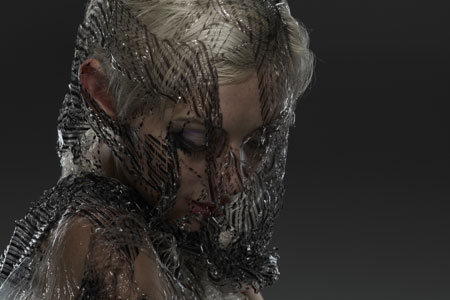
 Surrealism and its influences on contemporary  Japanese Fashion

Fashion for centuries has been influenced by many art movements which have shaped the fashion of today.  After visiting the exhibition of  the Future Beauty : 30 years of Japanese fashion at the Barbican i  noticed  some major influences of the surrealist movement on contemporary Japanese design conceptually and visually. I plan  to analyze the garments in depth both looking at the technical and the theoretical similarities. Surrealism brings "dream like sequences" to life and the designers fully embraces its "unreal nature" by the juxtaposition of subject matters, this forms the basis of many of the garment which where in the exhibition.  Many of the garments in the exhibition to me can only be described as  "clothing designed by artists "  where their work were created purely to convey a message and concept rather than for a cat walk. The reason for selecting this as my essay topic is that i regard fashion as another platform at which artists can use to present their work.

Here are some of the topics which i will compare and contrast :

  • Natural and unnatural world : the use of natural and very everyday objects to fuel designs 
  • Metamorphosis bodies and parts: I will look at the connections between  body and garments : the use of the body as a canvas.
  • The concept of  "ma" and how it is adapted to the garments from 2D to 3D : "extensions of their research into their contemporary society" 
  • looking at individual artists like Issey Miyake , Rei Kawakubo and Yohji Yamamoto : looking for how they used surrealism  in their work.

Friday, 28 January 2011

Week 3 Seminar : Portrait 11

Tales from the Publican 
(theories of consumption)


We were asked to visually represent the person within the chapter through 
collage or photo montage from the  Daniel Miller - the comfort of things 


"there is something about this mass of stuff and its openness. it is impossible to regard it as mess, it seems instead the evident testimony to a very full life."

Thursday, 27 January 2011

Aware: Art Fashion Identity


The exhibition examines how artists and designers use clothing as a mechanism to communicate and reveal elements of our identity. 


Study Task                                                    


What Does the exhibition teach us about people's motivation for consuming fashion ?


the exhibition taught us about identity as individuals and cultural identity

Wednesday, 26 January 2011

Sue Timney


Sue Timney  and the design of timney-fowler

The exhibition all though small was filled with all different examples of  printed textile from interior to fashion. Timeny's work shows examples from large wall hangings to small samples and swatch books. The work is very eccentric, with great use of  vivid patters and colour the exhibition was well worth it. 

Sunday, 23 January 2011

Budapest

PIERRE PUVIS - MAGDELENE


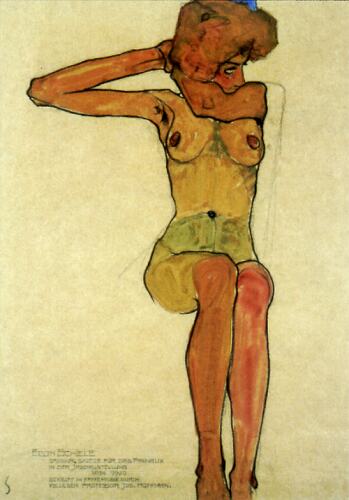
EGON SHIELE


JOZSEF RIPPL-RONAI


Tuesday, 11 January 2011

“POP UP PRIMATIVE II “

“POP UP PRIMATIVE  II “


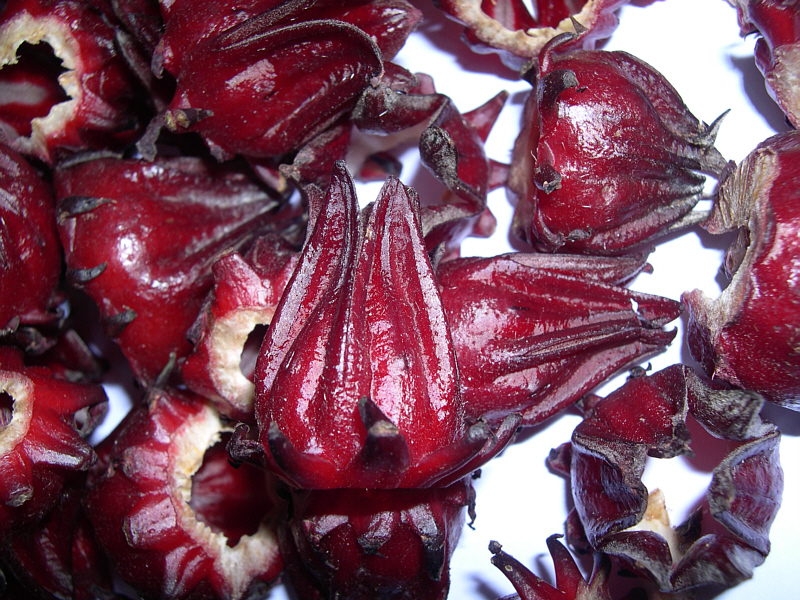
For my  net two rotations i will be doing Weave and Knit. I have planned to take a different approach to my new objects and decided to focus in the colour and the form of the objects.
These objects are used for herbal tea.

Sorrel


Wednesday, 5 January 2011

Swatch :

 This is a continuous project where we have been asked to collect  a wide variety of samples  this is in order to help us think about  the way weight , texture may effect the mood of the garment.


Monday, 13 December 2010

Future Beauty: 30 Years of Japanese Fashion


Future Beauty: 30 Years of Japanese Fashion is the first exhibition in Europe to comprehensively survey avant-garde Japanese fashion, from the early 1980s to the present. Curated by the eminent Japanese fashion historian Akiko Fukai, Director of the Kyoto Costume Institute, the exhibition explores the unique sensibility of Japanese design, and its sense of beauty embodied in clothing. 


Japanese fashion made an enormous impact on the world fashion scene in the late 20th century and designers such as Issey Miyake, Rei Kawakubo and Yohji Yamamoto redefined the very basis of fashion. Their works will be shown alongside Kawakubo’s protégé, the techno-couturier Junya Watanabe, together with the acclaimed Jun Takahashi, and the new generation of radical designers including Tao Kurihara,Fumito Ganryu, Matohu, Akira Naka and Mintdesigns


The Japanese culture of the kimono is very apparent in this exhibition, the cloths can only be described as shapeless and genderless. Western designers use the contours of the body to design in 3D but the japanese wrap the body in fabrics which hides the body shape.  


 Rie Kawakubo/ Comme des Garcon plays with this idea of proportion and what the contours of the body , creating garments which often either conceals the body or disfigures the contours of the body.


Flatness:  These garments designed by Rie Kawakubo/ Comme des Garcons were photographed by Naoya Hatakeyama in both dimensions  one gives you an image of the garment as a painting and the other as sculpture. this idea allows the viewer to see the garment seperate from  


At the end of this Exhibition the concept of "ma"  has fueled my ideals. The word "ma" can only be roughly described as "gap" "space" or "pause"  and when put into practice is the understanding of from and non-form in other words  negative space.
`

Saturday, 4 December 2010

Reflective statement


Reflective statement                                                                      

This term so far has gone well, i just finished my Stitch and Print rotations. I enjoyed Stitch because of the freedom to constrict fabric. For the Print rotation i i found interesting because of the range of techniques which we could do. i liked my digital print scarfs and the concept of defacing. for my "POP UP PRIMITIVE I" o focused on the textural qualities and line within my wooden carvings. for the next project i'm going to change the object  but following the theme of objects at home.I plan to focus on form and colour within my objects.

Monday, 29 November 2010

Turner prize 2010

At the turner prize i found works of  Angela de la cruz very inspiring:

ANGELA DE LA CRUZ

Angela de la Cruz
Angela de la Cruz has been nominated for her solo exhibition, 
After at Camden Arts Centre, London. De la Cruz uses the language of painting and sculpture to create striking works that combine formal tension with a deeper emotional presenceAngela de la Cruz was born in La Coruña, Spain in 1965. She moved to the UK in 1987 and studied at Goldsmiths College, London (1991-94) and the Slade School of Art, London (1994-96). She lives and works in London.


her work reminds me of pleats and folds which i use to present my samples she uses of drapery and colour  to convey her concepts. 


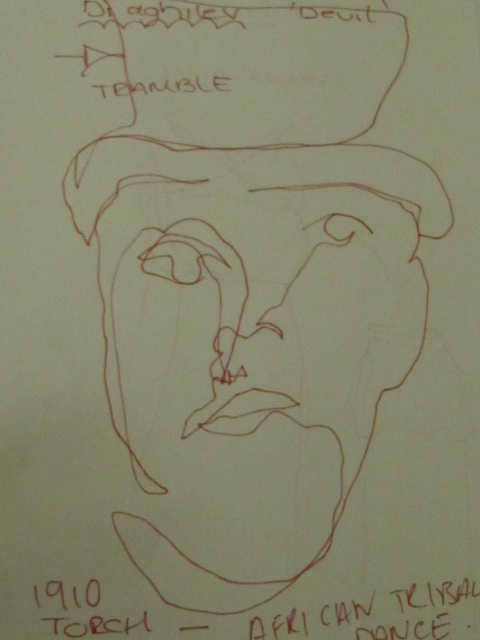
DIAGHILEV AND THE GOLDEN AGE OF THE BALLETS RUSSES, 1909-1929

Visits to Diaghilev at the V&A


Around 1900 artists and designers became fascinated with exotic themes. This can be seen in clothes by Poiret, and in paintings by Picasso. One of the most important influences was Diaghilev’s Ballets Russes, which employed Picasso, Poiret, Chanel and many other important designers. This session will include an overview of the design movement and a visit to the V&A Diaghilev exhibition. 


Serge Pavlovich Diaghilev was an impresario and the best of his era, a visionary in the dramatic arts and what we would call ahead of his time. He had visions of modernity and hired those who sheared that vision. He brought the arts together hiring the composers, artists and chorographers in a collaborative project where they made imagination a reality.

We are told “nothing was costume it was all real” the experience of his shows were moving and still influences the arts today. The inspiration for these productions came from all over the world.


 indian influence 


 Fashion inspired by the ballet russes


Here are some drawimgs of the costumes which i found really interesting:


‘Culture is a sort of theatre where various political and ideological causes engage one another’ Edward SaÏd, 1978

‘Orientalism is not a picture of the East or the Easts. It represents longing, option, and faraway perfection’ - Richard Martin, 1995

The influences of Asia on european culture was very significant during the 1900 the quotes from artists during and after this period  confirm the influence which countries like China and Japan had within design and art was major. 


Orientalisms, 1750-1920
Design                                                                                                                         Life
1761                 George III builds `Chinese Pagoda’ and `Turkish Mosque’ at Kew
                        Napoleon’s army invades Egypt and brings back antiquities                    1798
1815                 Royal Pavilion at Brighton decorated in Chinoiserie style
                        Britain defeats China in Opium War, forces new trade terms                    1842
                        American Navy forces Japan to open up after 200 years             1854
1862                 Japanese works shown at International Exhibition, London
1867                 Manet paints portrait of Zola with Japanese art
1875                 Liberty opens shop, East India House, selling oriental silks
1876                 Whistler works on decoration of `Peacock Room'
1877                 E W Godwin designs `Japanese' furniture for W Watt & Co
1885                 ‘The Mikado’ by Gilbert and Sullivan
1887                 Vincent van Gogh exhibits his own collection of Japanese prints
1891                 Book on Utamaro, Japanese printmaker, in French, sells 25,000
1904                 Premiere of ‘Madame Butterfly’ by Puccini
1906                 Poiret sets up as an independent designer
1909                 Poiret shows clothes with Oriental influence, including trousers
1909                 Diaghilev puts on `Cleopatra' and `Prince Igor' in Paris
1910                 Diaghilev puts on `Scheherezade' and `Firebird' in Paris
1911                 Poiret stages Oriental fancy-dress party, `1002nd Night’
1913                 Premiere of `Rite of Spring'; Nijinsky leaves Diaghilev
                        World War I                                                                               1914-19
                        Russian Revolution, followed by civil war                                   1917
                        Chinese Civil War (Emperor deposed, 1912)                               1919-28


Web Pages:
http://www.vam.ac.uk/collections/british_galls/styles/index.html
`Encounters’ exhibition guide
http://www.vam.ac.uk/vastatic/microsites/1196_encounters/index.html
Christopher Dresser
Tate Britain exhibition, ‚The Lure of the East: British Orientalist  Painting’ http://www.tate.org.uk/britain/exhibitions/britishorientalistpainting/default.shtm